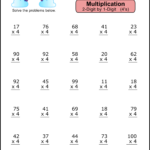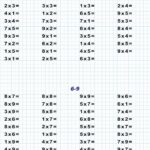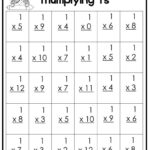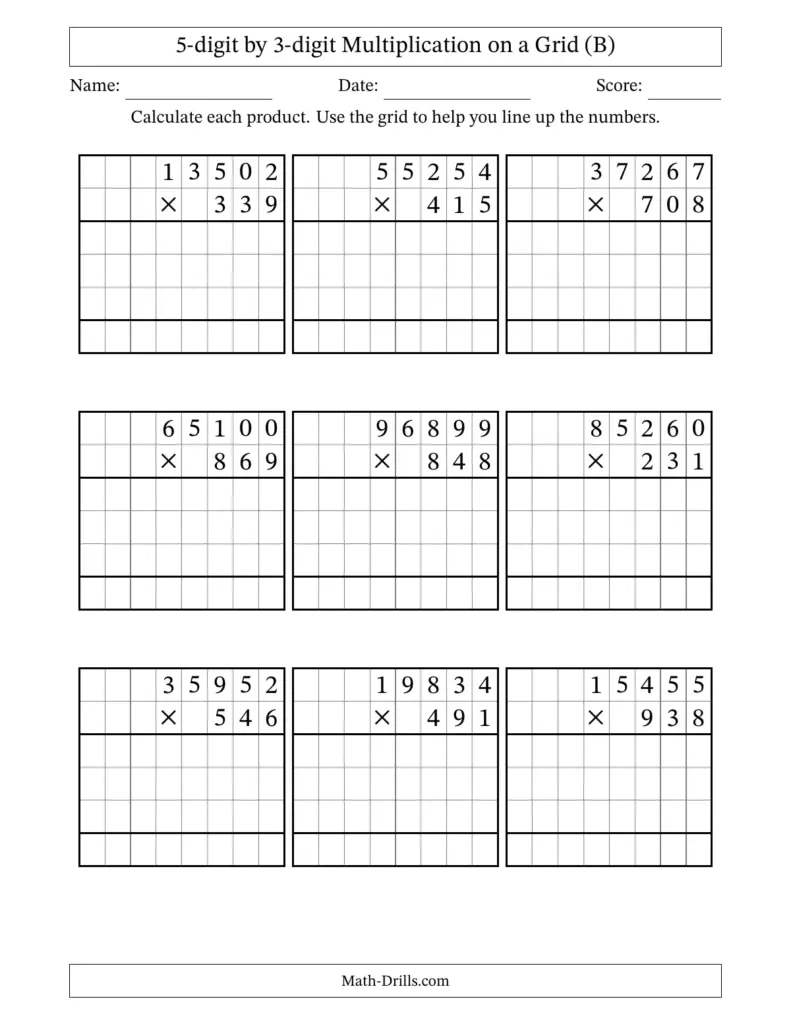
In the world of mathematics education, worksheets play a pivotal role in reinforcing concepts and skills. The 5 Digit By 3 Digit Multiplication Worksheets B are specifically designed to help students practice and master the multiplication of large numbers. This resource is excellent for students in upper elementary grades, typically around 4th to 6th grade, who are beginning to tackle more complex multiplication problems.
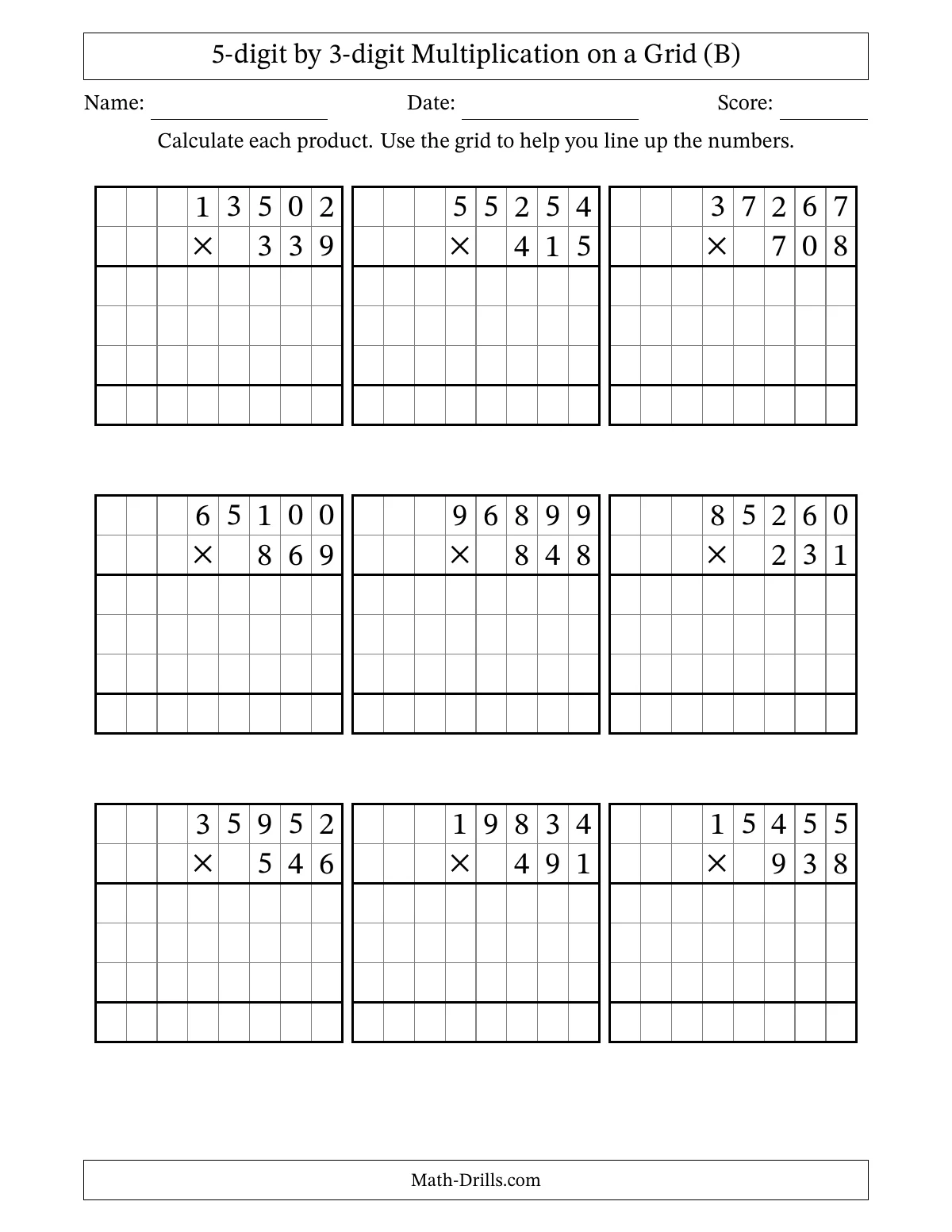
Understanding the Layout of the Worksheets
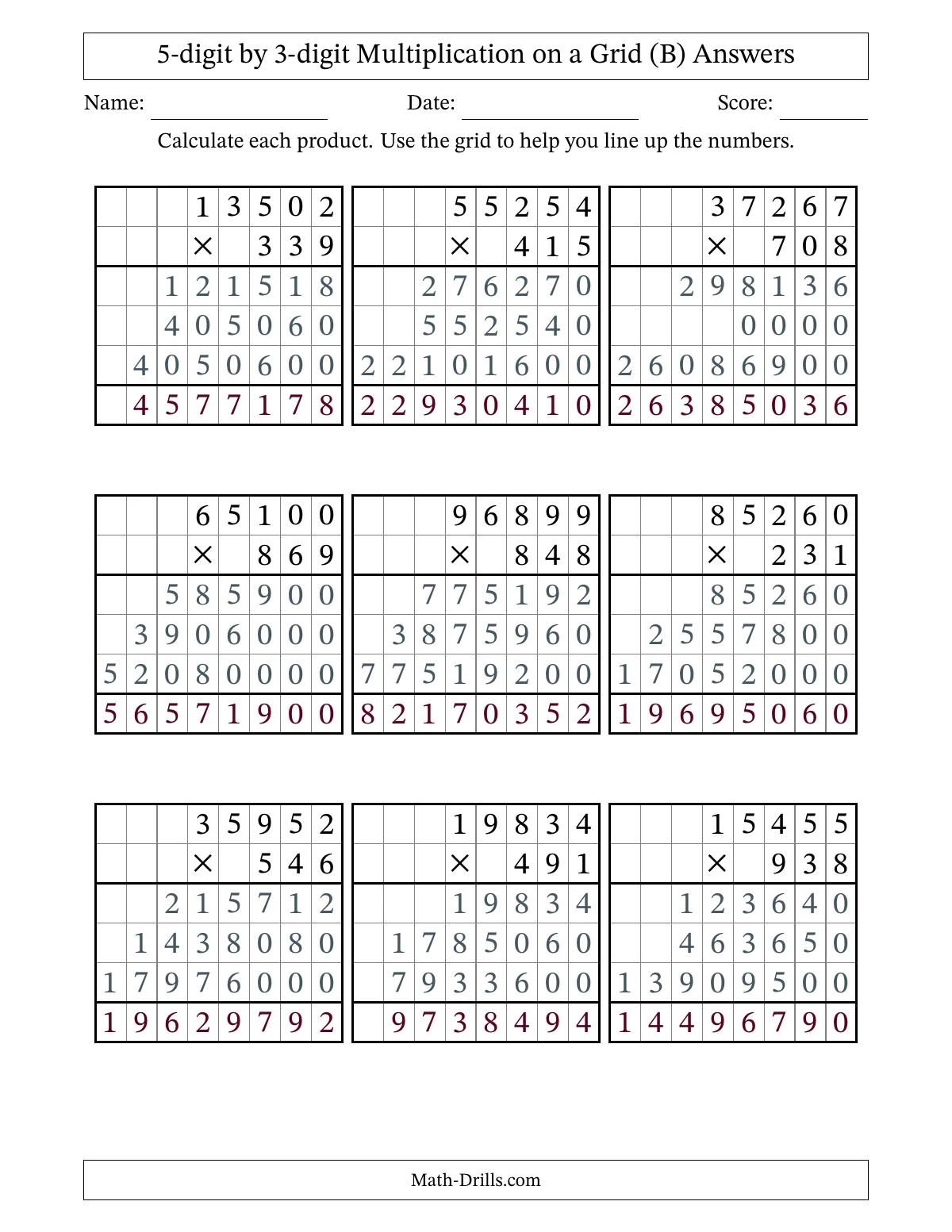
These worksheets are formatted in a user-friendly manner that promotes clarity and ease of use. Each worksheet typically includes:
- A title at the top indicating the focus on 5-digit by 3-digit multiplication.
- Clearly defined sections that separate different types of problems to help students focus.
- Ample space for calculations, allowing students to show their work without feeling cramped.
The design encourages students to practice multiplication in a structured way, reducing anxiety and allowing them to concentrate on problem-solving. The consistent layout across multiple sheets means that students can become familiar with the format quickly, which is essential for building confidence.
Spacing Practice Across the Week
One effective teaching strategy is to space out practice sessions throughout the week rather than cramming all exercises into one sitting. This approach, known as distributed practice, helps reinforce learning and improves retention.
For instance, you might assign one worksheet each day of the week, focusing on different aspects of multiplication. On Monday, students could tackle straightforward problems, while Tuesday could introduce word problems that require them to apply multiplication in real-world contexts. By Friday, students can revisit difficult concepts or challenge themselves with more complex problems. This gradual increase in difficulty helps solidify understanding and allows for reflection on what they’ve learned.
Benefits of Using 5 Digit By 3 Digit Multiplication Worksheets B
The worksheets provide several benefits that enhance the learning experience:
- Skill Reinforcement: Regular practice helps students solidify their multiplication skills, making them more confident in their abilities.
- Variety of Problems: These worksheets often include a mix of straightforward multiplication problems and word problems, catering to different learning styles.
- Immediate Feedback: Teachers can quickly assess student understanding by reviewing completed worksheets, allowing for timely intervention when needed.
In a classroom setting, these worksheets can be used as part of a daily math warm-up, homework assignments, or even as assessments to gauge student progress.
Tips for Effective Use in the Classroom
When incorporating the 5 Digit By 3 Digit Multiplication Worksheets B into your teaching, consider the following tips:
- Introduce Gradually: Begin with simpler multiplication problems and gradually introduce the worksheets as students become comfortable with larger numbers.
- Pair with Visual Aids: Use visual aids like number lines or multiplication charts to support students as they work through the worksheets.
- Encourage Collaboration: Allow students to work in pairs or small groups to discuss their problem-solving strategies. This collaboration can foster deeper understanding and peer learning.
The worksheets are versatile enough to be used in a variety of settings, including traditional classrooms, homeschool environments, or even as supplemental practice at home.
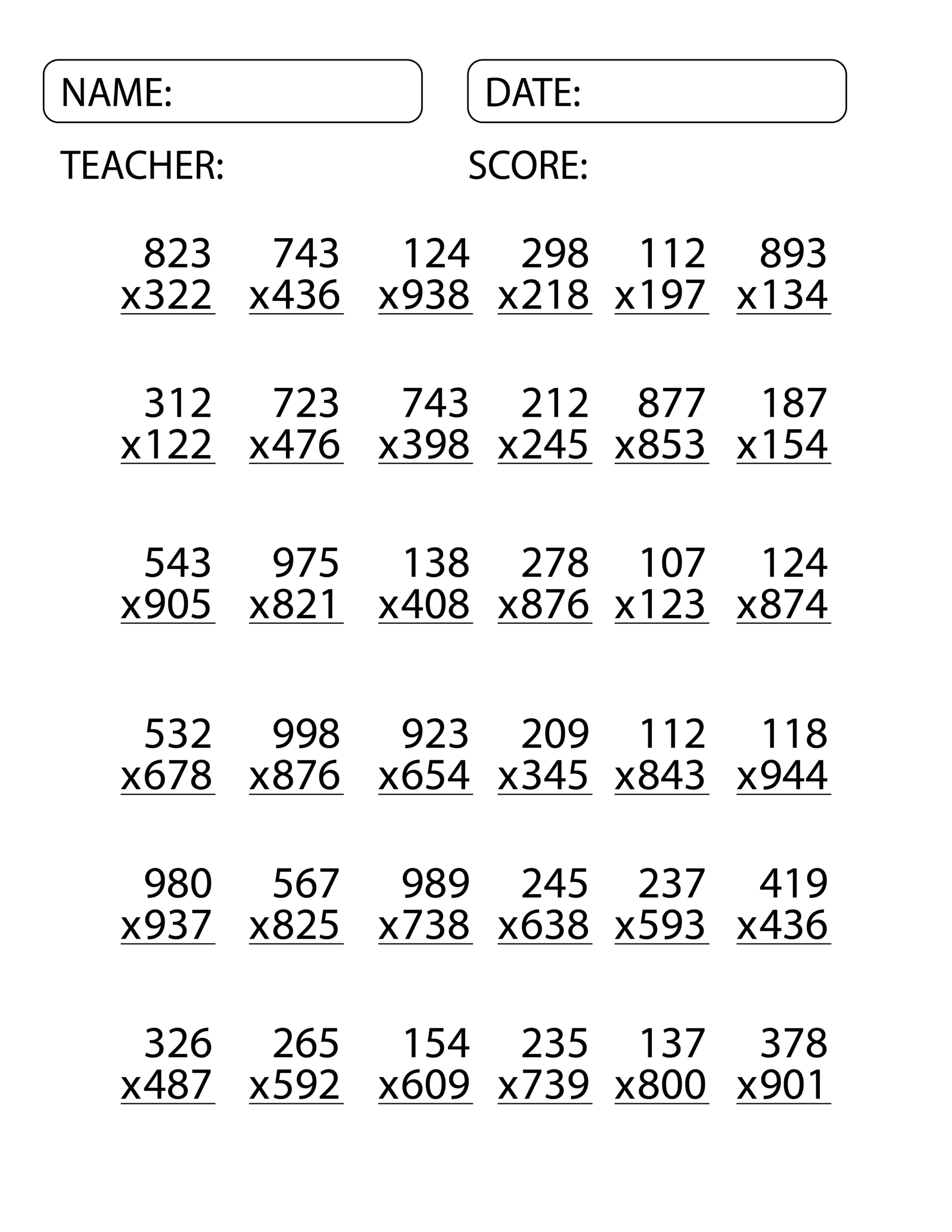
Downloading and Printing the Worksheets
These worksheets are typically available in PDF format, making them easy to download and print. When preparing to print, consider the following:
- Paper Type: Use standard 8.5 x 11-inch paper for easy printing. If you plan to laminate the worksheets for repeated use, consider using heavier cardstock.
- Printer Settings: Ensure your printer settings are adjusted for quality printing. For best results, use a portrait layout, which tends to work better for most home printers.
Before distributing the worksheets, take a moment to review them yourself. Check for any potential errors in the problems and ensure that they align with your lesson objectives.