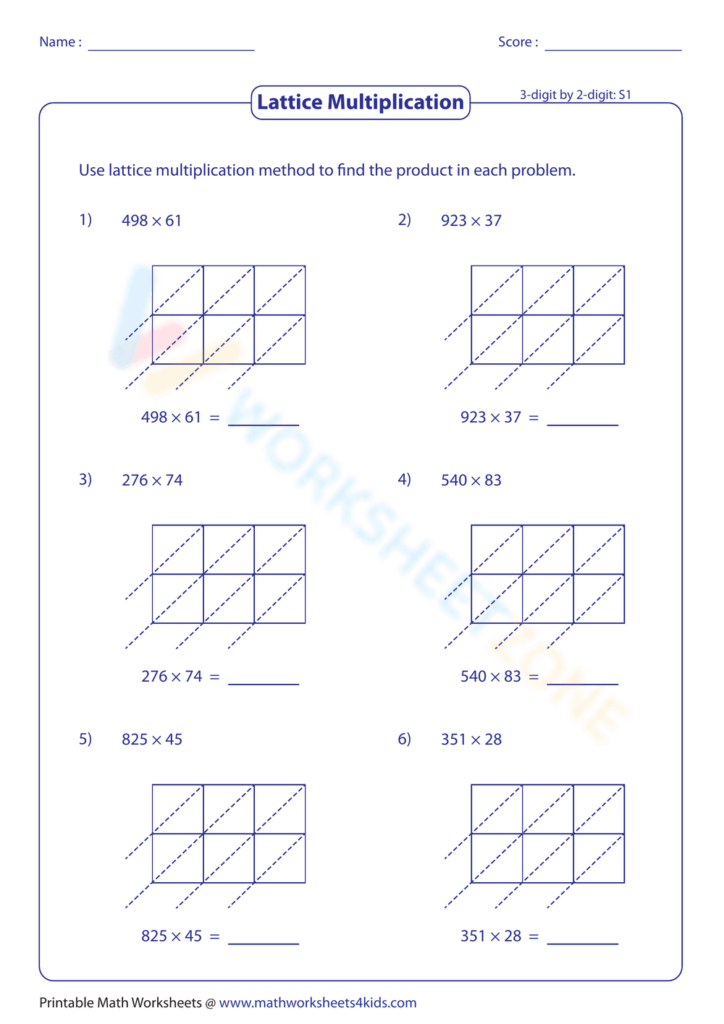
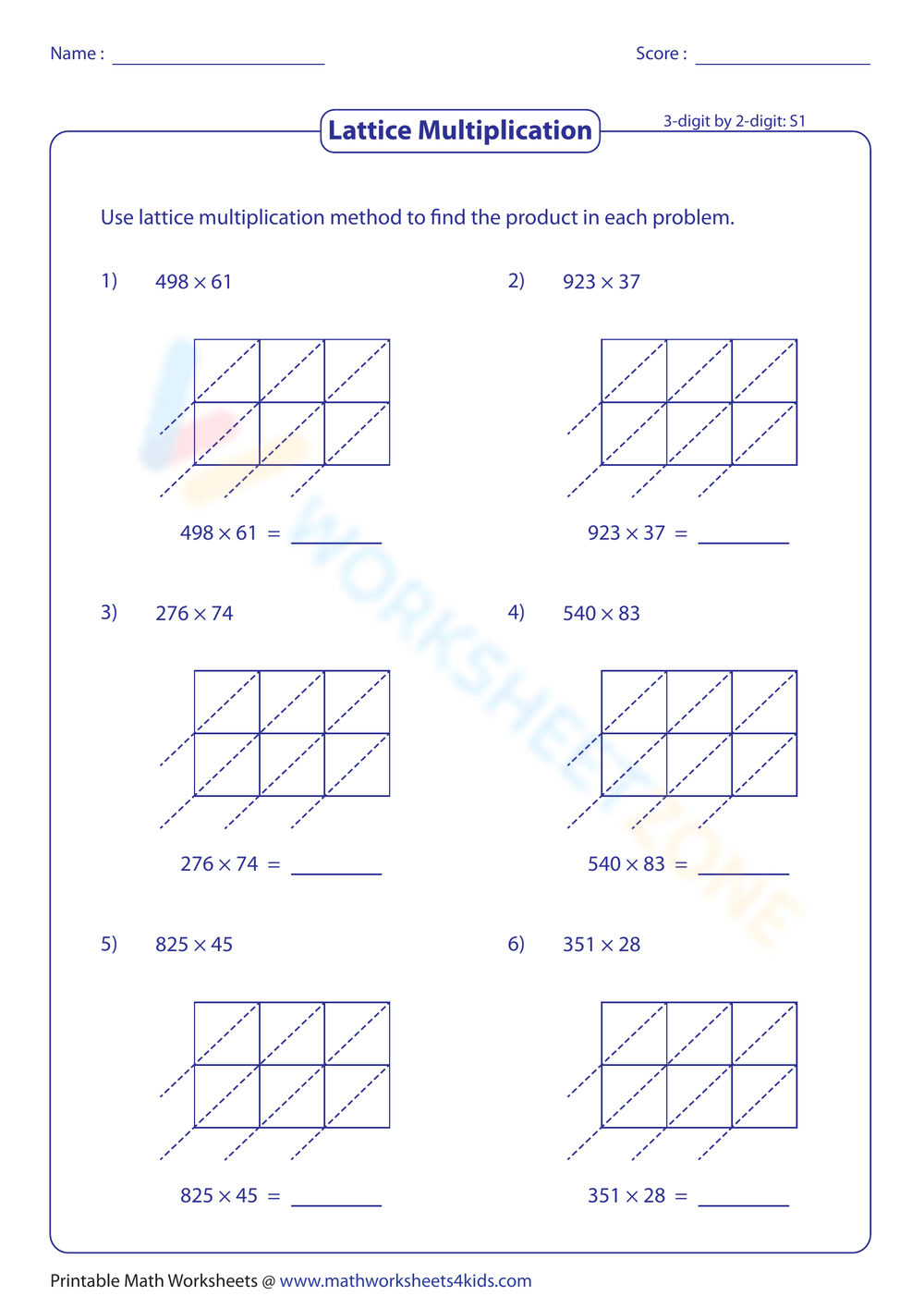
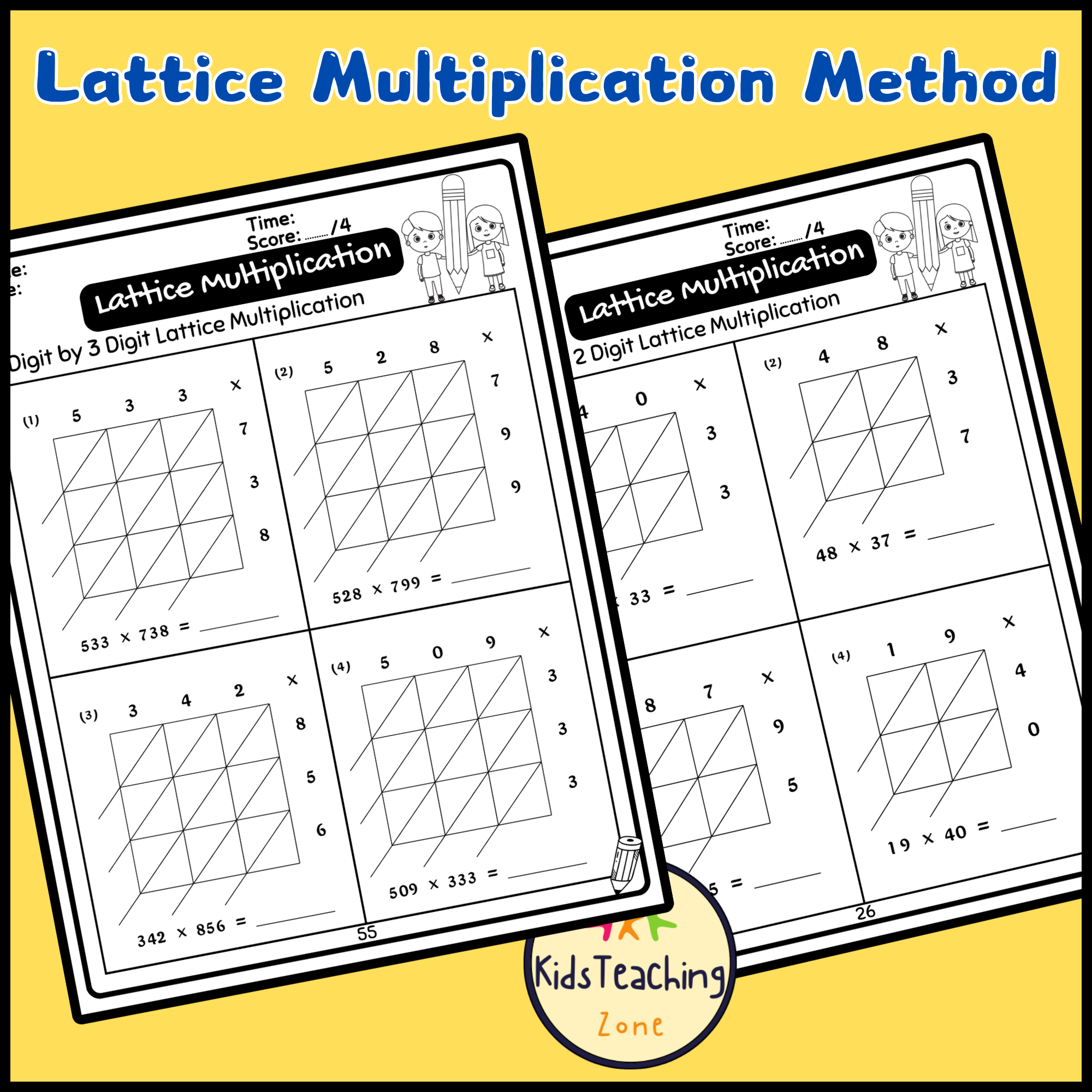
Teaching multiplication can be a challenging yet rewarding experience, especially when introducing students to more complex methods like lattice multiplication. The 3digit By 2digit Lattice Multiplication Worksheet is an excellent resource for educators aiming to help their students grasp this technique effectively. This printable worksheet provides structured practice, enabling learners to develop their multiplication skills in a clear, visually engaging format.
Understanding Lattice Multiplication
Lattice multiplication is a method that simplifies the multiplication of larger numbers by breaking them down into smaller, manageable parts. This technique uses a grid, or lattice, to organize the multiplication process, making it easier for students to visualize and calculate products accurately. By using a 3digit by 2digit lattice multiplication worksheet, students can practice multiplying three-digit numbers by two-digit numbers, which is a key skill typically introduced in upper elementary grades, around 4th to 6th grade.
How to Use the Worksheet
Step 1: Download and Print
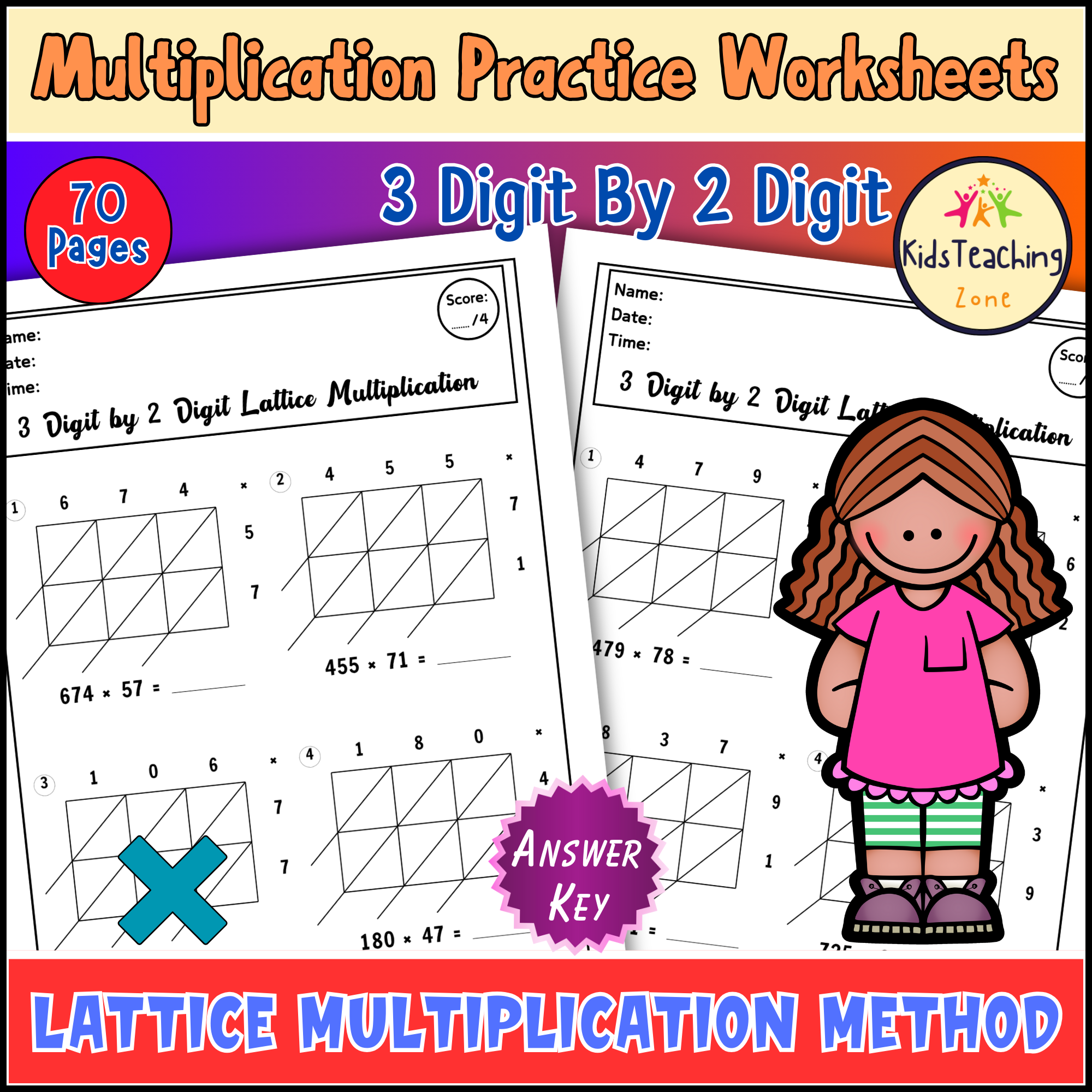
The first step in utilizing the 3digit By 2digit Lattice Multiplication Worksheet is to download and print it. Most resources will provide the worksheet in a PDF format, which ensures that the layout remains consistent when printed. It’s advisable to use standard paper sizes like 8.5″ x 11″, as this is compatible with most home and school printers. If you plan to use the worksheet multiple times, consider printing it on cardstock for durability or laminating it.
Step 2: Introduce the Lattice Method
Before diving into the worksheet, introduce the lattice multiplication method to your students. Explain the structure of the lattice grid, showing them how to draw it. Typically, a 3-digit by 2-digit multiplication will require a grid that consists of six boxes, where each box will hold the product of the digits being multiplied. Encourage students to draw the grid and label it properly, as this will help them keep their work organized.
Step 3: Demonstrate a Sample Problem
Walk through a sample problem together as a class. For example, take the numbers 234 and 56. Show students how to fill in the lattice grid:
- Multiply each digit of 234 by each digit of 56.
- Write the results in the corresponding boxes, ensuring that tens and ones are separated (e.g., if the product is 12, write 1 in the upper triangular part and 2 in the lower triangular part of the box).
- Add the numbers along the diagonals to find the final product.
This step is crucial as it helps students visualize the process and understand how to break down the multiplication into smaller parts.
Checking Progress and Mastery
As students work through the 3digit By 2digit Lattice Multiplication Worksheet, it’s essential to monitor their progress. Look for the following indicators of mastery:
- Correct Grid Setup: Ensure students are drawing the lattice correctly and organizing their calculations properly.
- Accurate Products: Check that students are multiplying digits correctly and placing the results in the right sections of the grid.
- Proper Diagonal Addition: Review how they are adding the diagonal sums. This can be a common area of confusion, so provide additional practice if necessary.
If students consistently struggle with any of these areas, it may be beneficial to revisit the lattice method with additional examples or practice problems.
Additional Activities to Reinforce Learning
To reinforce the skills learned from the 3digit By 2digit Lattice Multiplication Worksheet, consider incorporating the following activities into your lesson plan:
- Pair Work: Have students work in pairs to solve problems together. This collaborative approach can help them articulate their thought processes and learn from each other.
- Games: Create multiplication games that involve lattice multiplication, such as timed challenges or competitive quizzes.
- Real-World Applications: Discuss real-life scenarios where multiplication is used, such as calculating prices during shopping or measuring areas in construction. This contextualizes the skill and shows its relevance.