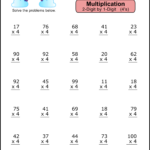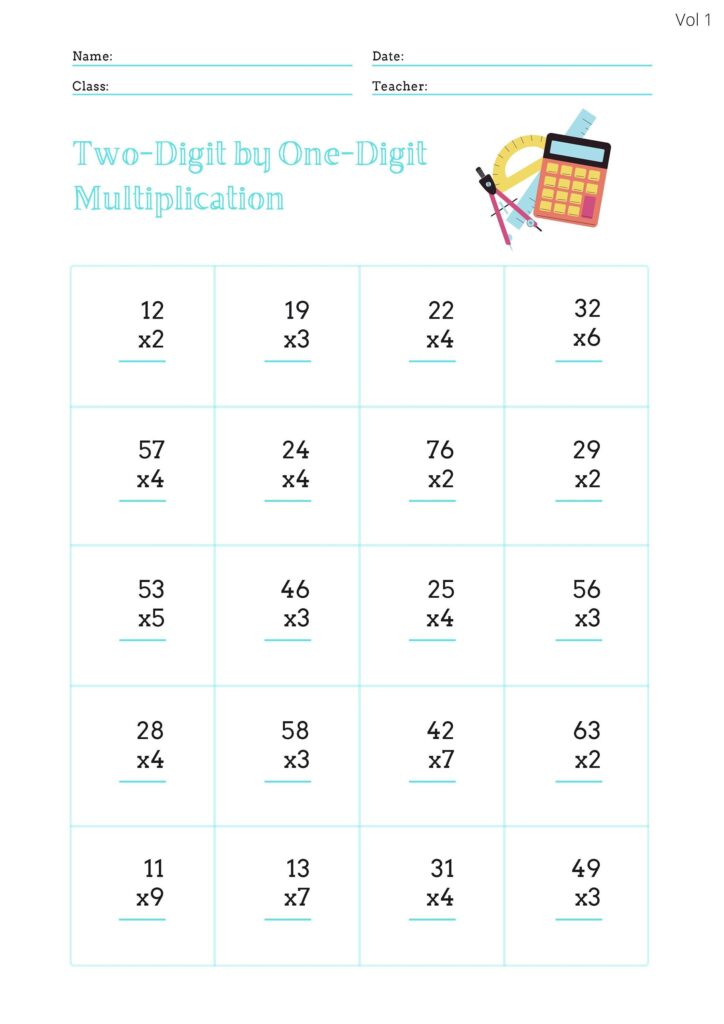
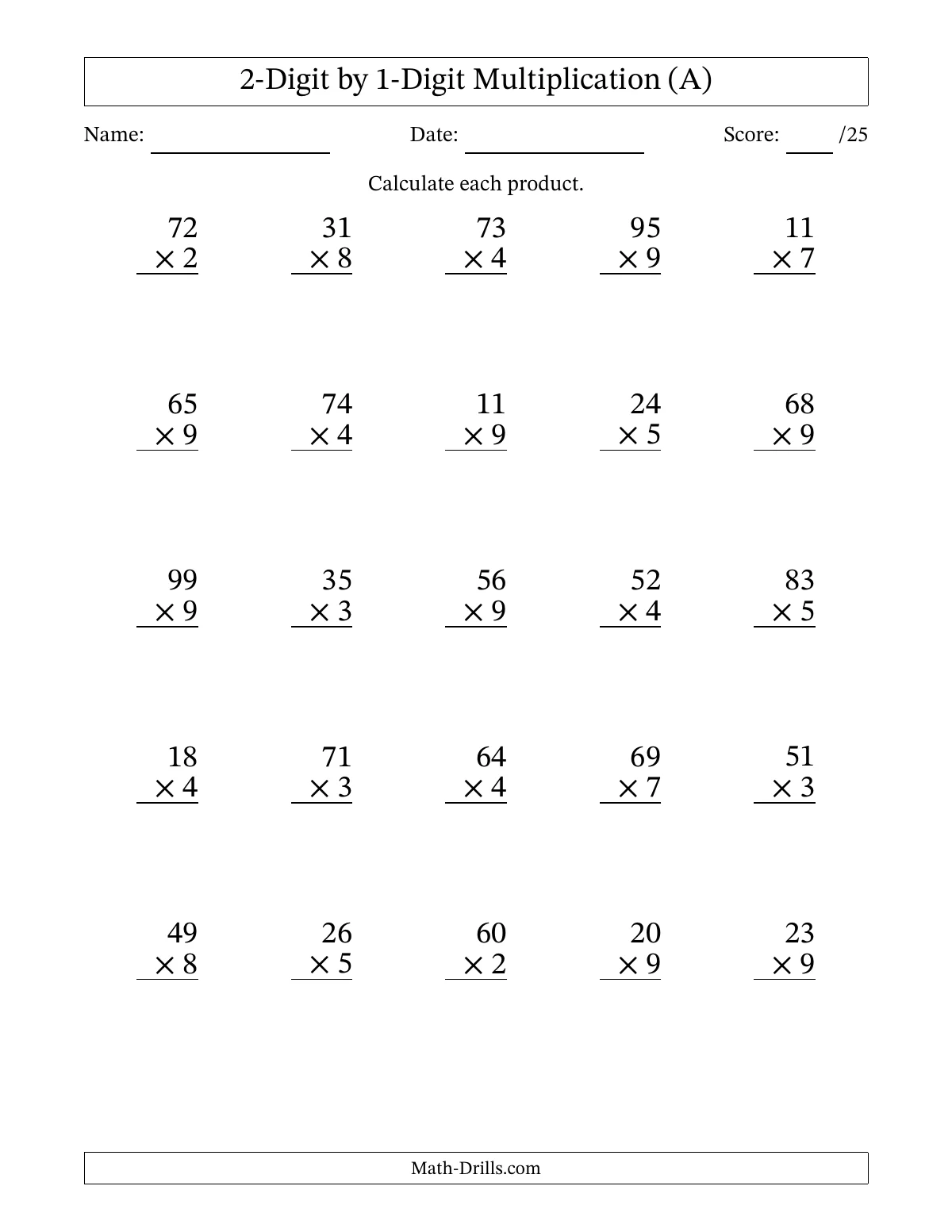
Using a 2digit By 1digit Multiplication Worksheet can be a powerful tool for students learning multiplication. These worksheets provide a structured way to practice multiplying two-digit numbers by one-digit numbers, fostering both skill development and confidence. Typically aimed at students in grades 3 to 5, this resource plays a vital role in reinforcing foundational math skills that are essential for future learning.
Understanding the Structure of the Worksheet
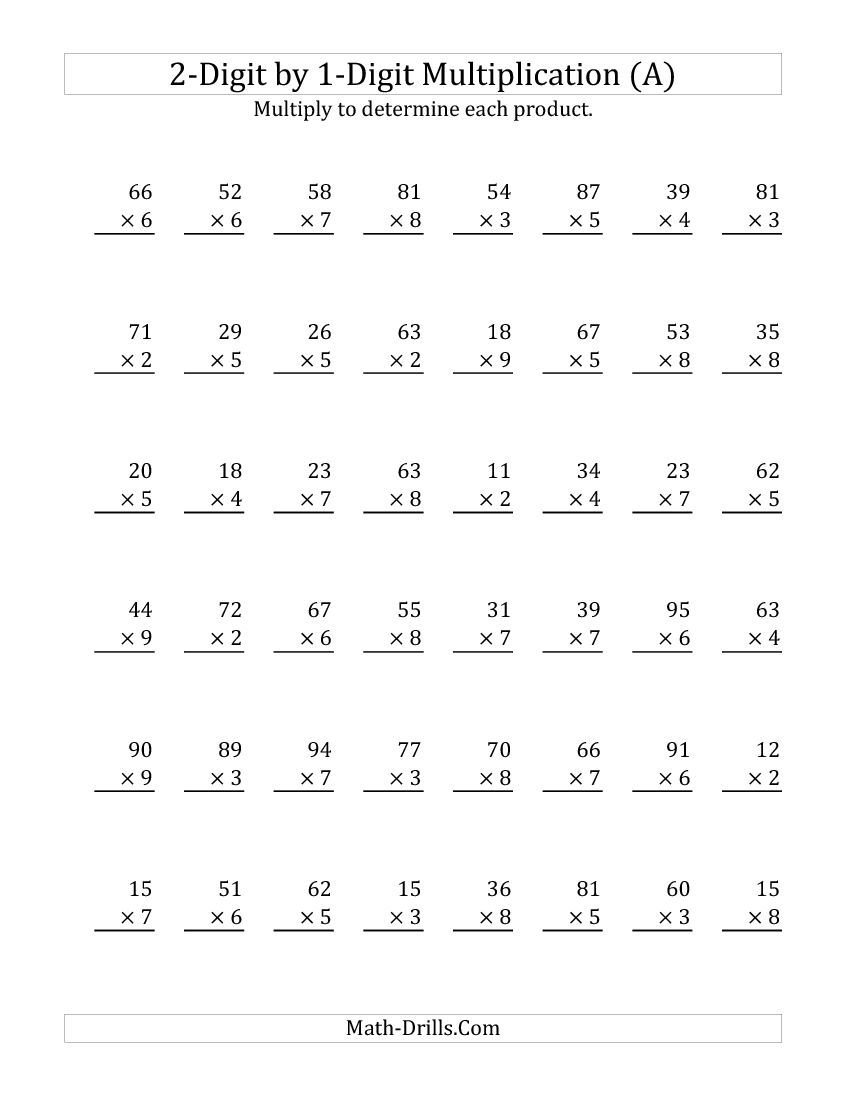
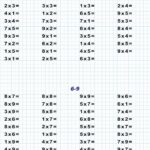
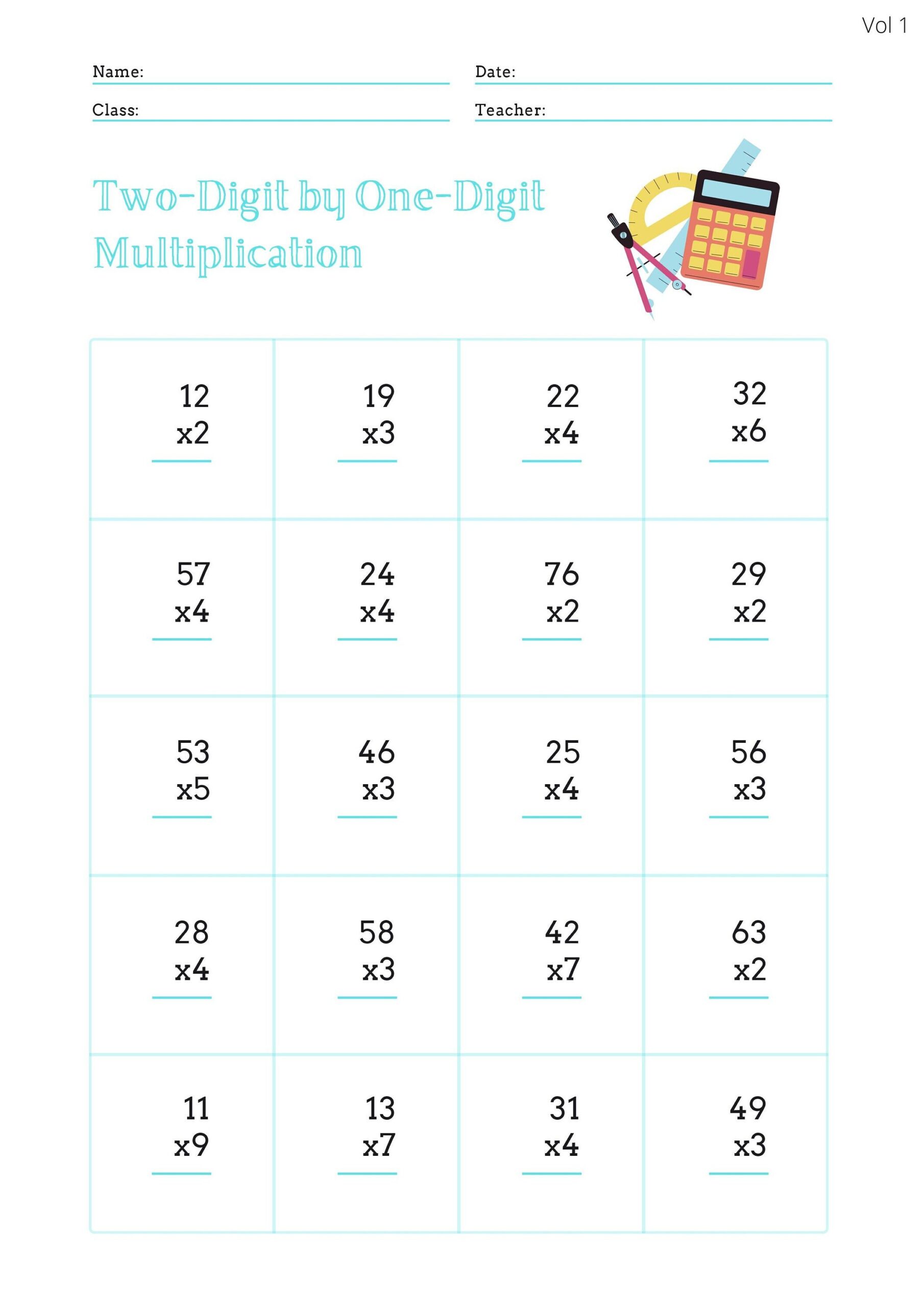
A typical 2digit By 1digit Multiplication Worksheet will include a series of problems where students multiply two-digit numbers (like 23 or 47) by single-digit numbers (like 3 or 5). Each problem is clearly laid out, allowing students to focus on the multiplication process without unnecessary distractions.
For effective use, ensure that the layout is easy to follow. Worksheets can vary in design, with some presenting problems in a grid format while others list them vertically. Choose a format that aligns with your teaching style and your students’ learning preferences.
Downloading and Printing the Worksheet
When it comes to downloading, these worksheets are commonly available in PDF format. This is beneficial because PDFs maintain formatting across different devices and printers. Before printing, consider the following:
- Printer Settings: Most home and classroom printers work well with standard A4 or letter-sized paper. Make sure your printer is set to print in portrait mode for optimal layout.
- Paper Quality: For worksheets that will be used repeatedly, consider printing on heavier paper or cardstock. This ensures durability, especially if you plan to laminate them for multiple uses.
- Color vs. Black and White: While color printing can enhance engagement, black and white prints are often more cost-effective. If using colored worksheets, ensure your ink levels are sufficient for bulk printing.
Preparing the Worksheet for Classroom Use
Once printed, it’s important to organize the worksheets for classroom distribution. Here are some practical tips:
- Bundling Copies: If you’re teaching a larger class, print multiple copies of the worksheet and bundle them according to student groups. This saves time during distribution.
- Answer Key: Always prepare an answer key for your own reference. This allows for quick grading and helps identify common mistakes among students. You can create a separate document with the answers aligned to the problems on the worksheet.
- Supplemental Materials: Consider providing additional resources, such as manipulatives or online games, that align with the worksheet to reinforce learning.
Tracking Student Progress
To effectively track progress, consider the following strategies:
- Regular Assessment: Use the 2digit By 1digit Multiplication Worksheet regularly as part of your math curriculum. This helps assess students’ understanding over time and identify areas needing more focus.
- Feedback Mechanisms: After grading, provide constructive feedback. Highlight areas where students excelled and where they need improvement. This can be done through written comments on their worksheets or through a follow-up discussion.
- Incorporate Technology: If your classroom utilizes technology, consider using online platforms where students can complete similar multiplication exercises. This can serve as an engaging supplement to the worksheets.
Adapting the Worksheet for Different Learning Levels
Not every student learns at the same pace, so adapting the 2digit By 1digit Multiplication Worksheet can be beneficial. Here are a few ideas:
- Differentiated Problems: Create multiple versions of the worksheet with varying levels of difficulty. For students who may struggle, provide problems with one less digit or allow the use of a calculator for verification.
- Group Work: Encourage collaborative learning by having students work in pairs or small groups. This allows them to discuss their thought processes and learn from each other.
- Games and Challenges: Turn the worksheet into a game by timing how long it takes students to complete the problems. This can introduce a fun competitive element that motivates students.