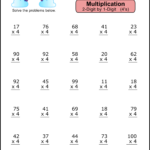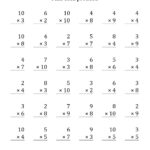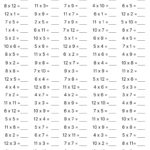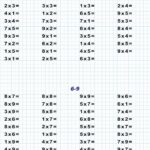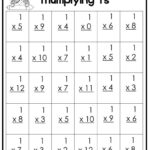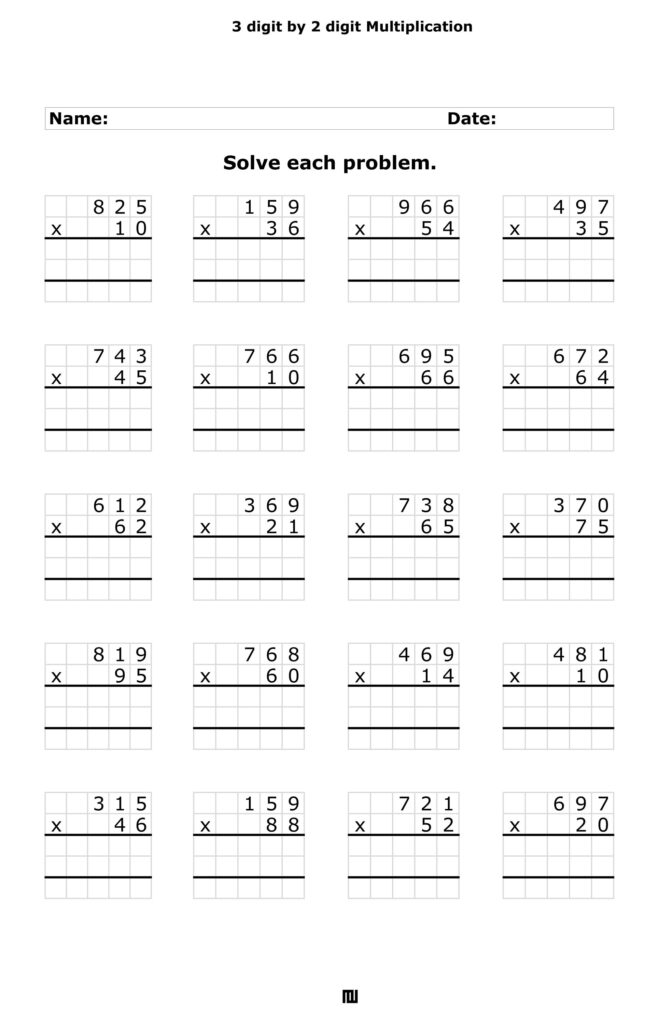
Mastering multiplication is essential for students, but many struggle with larger numbers. The challenge of multiplying two-digit numbers by three-digit numbers can be particularly daunting. This is where 2 Digits By 3 Digit Multiplication Worksheets come in. These worksheets provide structured practice that helps students build confidence and competence in their multiplication skills. By incorporating these resources into your teaching strategy, you can effectively address common difficulties and reinforce essential math concepts.
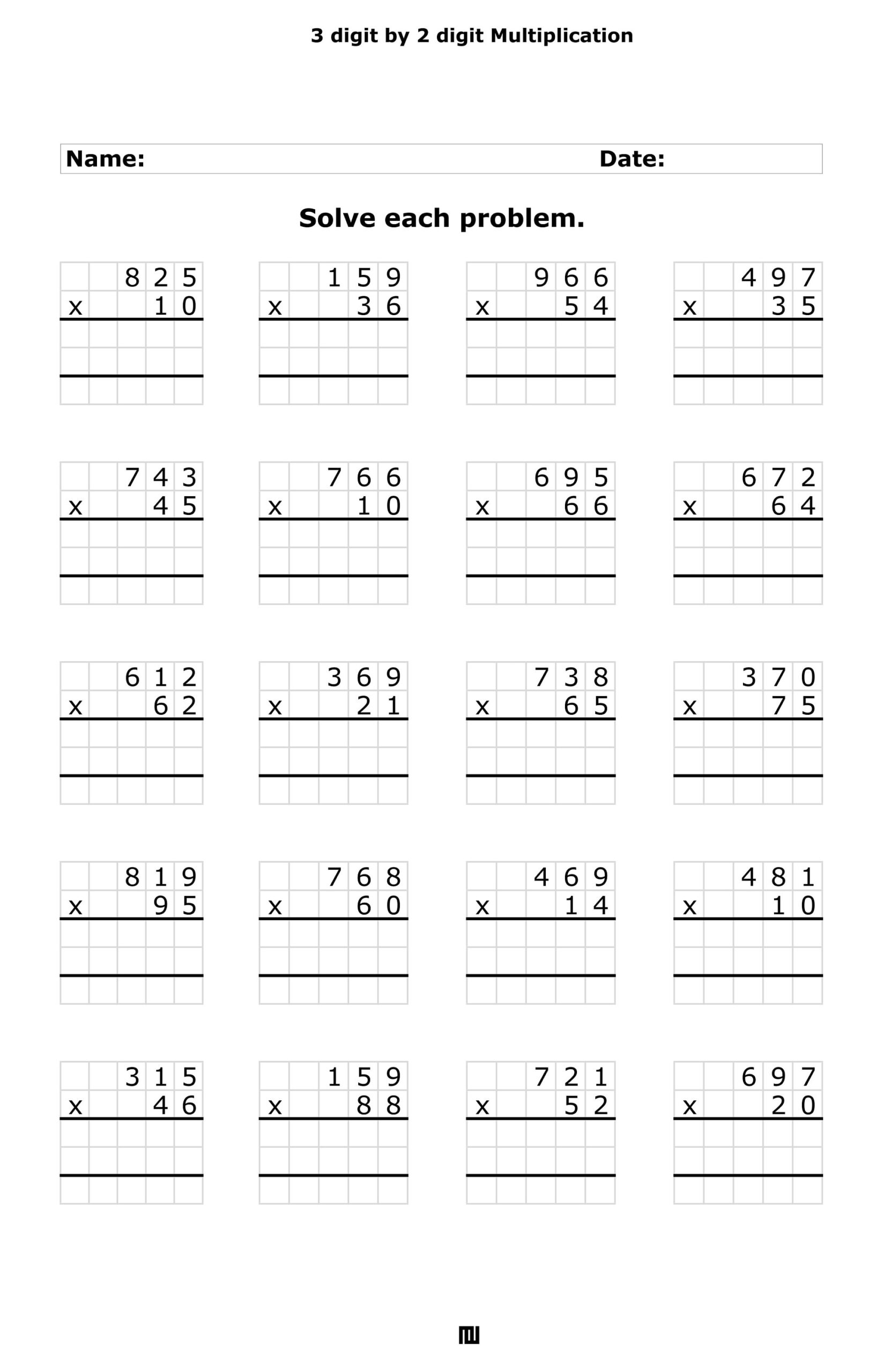
Understanding the Basics of Multiplication
Before diving into the worksheets, it’s important to ensure that students have a firm grasp of basic multiplication facts. This foundational knowledge is critical for tackling more complex problems. Consider reviewing one-digit and two-digit multiplication before introducing worksheets that involve three-digit numbers. This step ensures that students can approach the task with the confidence they need to succeed.
When students work on 2 Digits By 3 Digit Multiplication Worksheets, they are not just practicing multiplication; they are also enhancing their problem-solving skills. These worksheets often consist of a variety of problems, ranging from straightforward calculations to word problems that require critical thinking. By varying the types of questions, you keep students engaged and encourage them to think deeply about the concepts.
Benefits of Using Worksheets in Class
Incorporating worksheets into your teaching routine can provide numerous benefits for both teachers and students. Here are a few reasons why 2 Digits By 3 Digit Multiplication Worksheets are a valuable resource:
- Practice and Repetition: Frequent practice helps reinforce skills. These worksheets allow students to practice multiplication in a consistent manner, which is crucial for mastery.
- Immediate Feedback: Worksheets can be graded or reviewed quickly, providing immediate feedback to students. This helps them identify areas where they need improvement.
- Structured Learning: Worksheets provide a structured format that can make learning more manageable for students. They can tackle problems step by step, reducing anxiety.
- Variety of Formats: Many worksheets come in various formats, including word problems, grid formats, and traditional equation forms, catering to different learning styles.
Effective Strategies for Using Worksheets
When using 2 Digits By 3 Digit Multiplication Worksheets, it’s helpful to implement strategies that promote effective learning. Here are some practical tips:
Space Out Practice Sessions
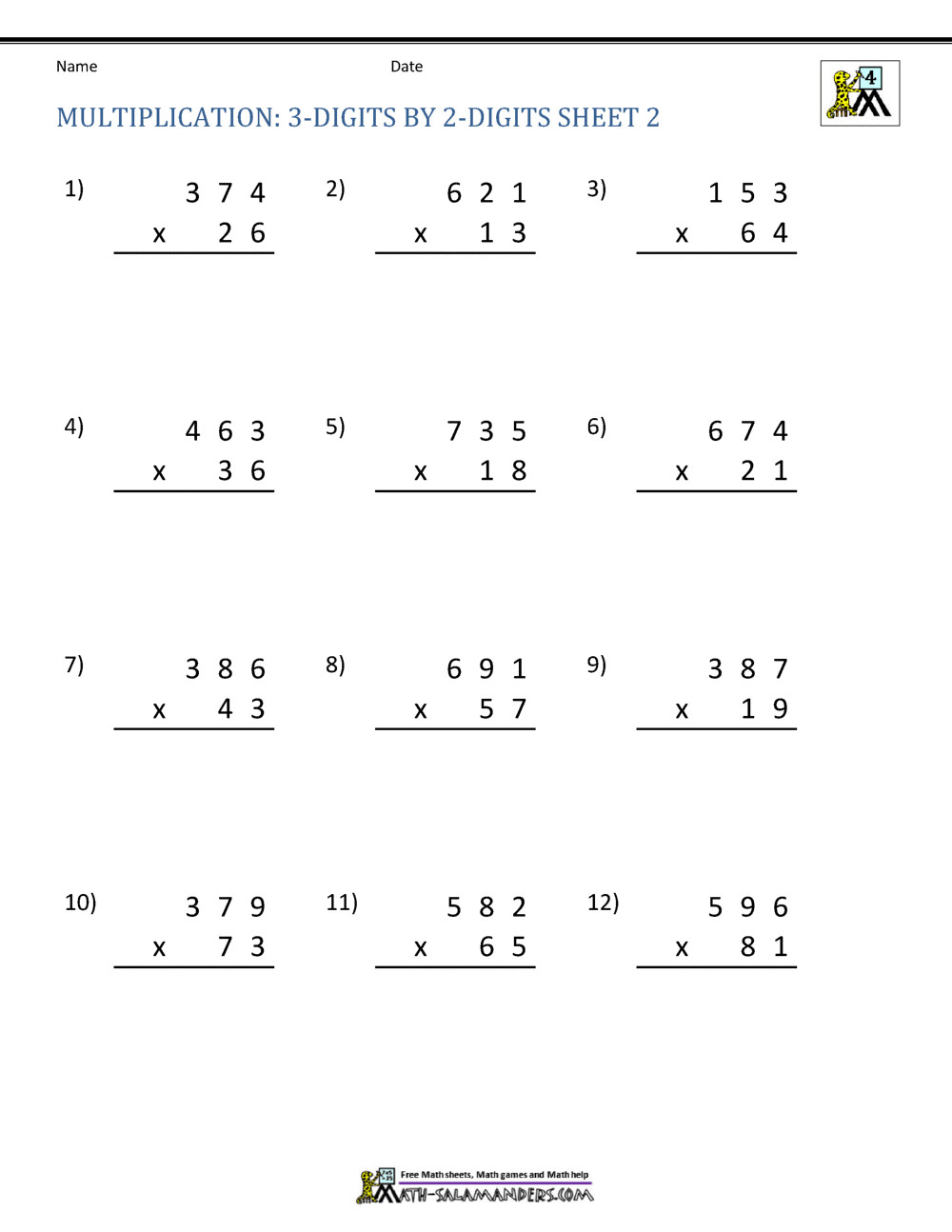
Instead of overwhelming students with a large number of problems in one sitting, spread the practice over several days. This spaced repetition helps reinforce learning and reduces frustration. For instance, you might assign a worksheet at the beginning of the week and a different one later in the week to keep skills fresh without causing burnout.
Incorporate Collaborative Learning
Encourage students to work in pairs or small groups when tackling these worksheets. Collaborative learning can enhance understanding as students explain their reasoning to one another. This method also fosters teamwork and communication skills, which are invaluable in the learning process.
Use Visual Aids
Incorporating visual aids alongside worksheets can enhance comprehension. You might use manipulatives or visual models to demonstrate the multiplication process. For example, using base-ten blocks can help students visualize how two-digit and three-digit numbers interact during multiplication.
Types of Worksheets to Consider
When selecting 2 Digits By 3 Digit Multiplication Worksheets, consider the following types to ensure a comprehensive approach to learning:
- Standard Worksheets: These sheets typically feature straightforward multiplication problems that require students to perform calculations.
- Word Problems: These worksheets present real-world scenarios that require students to apply their multiplication skills in context. This approach helps students understand the practical application of math.
- Mixed Review Worksheets: Combining different types of problems helps reinforce a variety of skills, ensuring that students are not just memorizing but truly understanding the material.
Creating a Routine for Success
Establishing a routine that incorporates 2 Digits By 3 Digit Multiplication Worksheets can be beneficial. Here’s how you can create an effective routine:
- Daily Warm-Ups: Start each math class with a short warm-up that includes a few problems from the worksheets. This gets students thinking and primes their minds for learning.
- Weekly Assessments: At the end of the week, consider giving a quiz that incorporates problems similar to those found in the worksheets. This way, students can showcase their progress.
- Reflect and Adjust: After each week, reflect on the students’ performance. If certain areas show consistent struggle, adjust your approach or provide additional resources to address those needs.
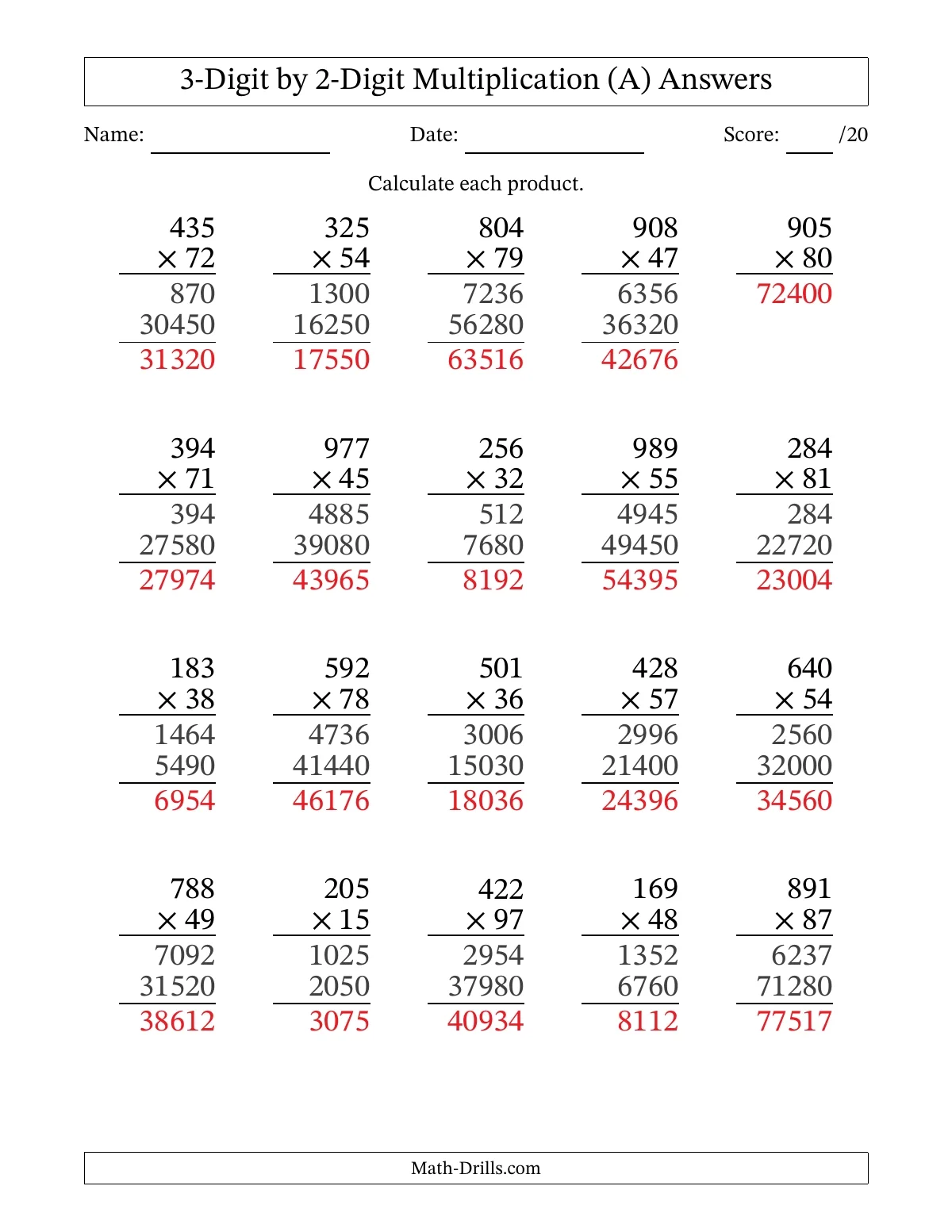
Additional Resources to Enhance Learning
While worksheets are a fantastic tool, they can be even more effective when combined with other resources. Here are some additional materials you might consider:
- Online Math Games: These can provide interactive practice and make learning more enjoyable for students. Look for games that focus on multiplication to supplement your worksheets.
- Flashcards: These are excellent for reinforcing basic multiplication facts, which are crucial for success in 2 Digits By 3 Digit multiplication.
- Math Journals: Encourage students to keep a math journal where they can reflect on what they’ve learned. This practice promotes deeper thinking and helps solidify concepts.
By utilizing 2 Digits By 3 Digit Multiplication Worksheets effectively, teachers can create a supportive learning environment where students feel empowered to tackle challenging problems. Remember, the key is consistency and a willingness to adapt your teaching strategies based on student needs. With the right resources and techniques, you can help your students develop a solid foundation in multiplication that will benefit them for years to come.
One immediate tip: If you’re creating your own worksheets, consider including a variety of problem types to cater to different learning styles and keep students engaged.